Confidential computing is most useful when sensitive data or code must be processed on infrastructure that the workload owner does not fully trust. Common use cases include confidential AI, privacy-preserving data collaboration, secure cloud migration, regulated workloads, and protected blockchain or Web3 services.
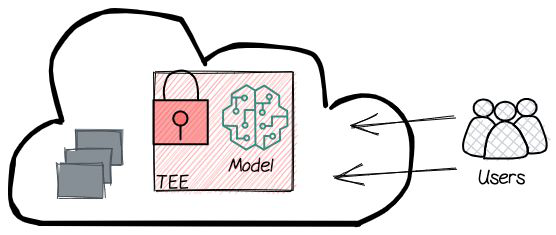
1. Secure AI Inference
Problem:
You’ve trained a proprietary AI model (or fine-tuned an LLM on private data). You want to serve it via API in a public cloud — but you don’t want the cloud provider, or other tenants, to extract your model weights.
Relevant patterns:
Run inference on a trained model in public cloud without exposing model weights to the cloud provider
Run LLM chatbots fine-tuned on private data
Confidential RAG (Retrieval Augmented Generation) with private document stores
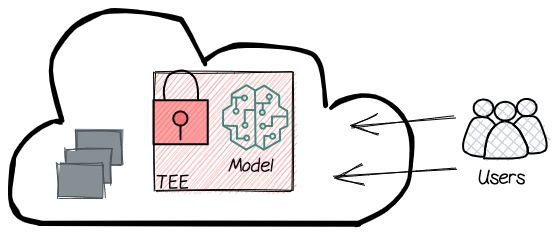
2. Secure Chatbot / LLM Serving
This is subtly different from secure inference — here the model is known/public, but user inputs are sensitive. The TEE protects user queries, conversation history, and fine-tuned model variants.
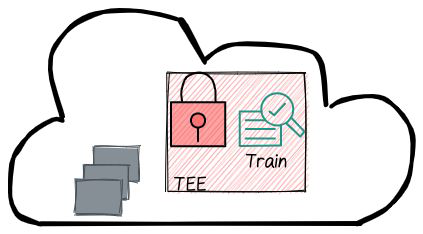
3. Secure AI Training
Problem:
Your GPU cluster is too small. You want to use a third-party data center’s capacity — but your training data is sensitive (medical records, financial data, proprietary datasets).
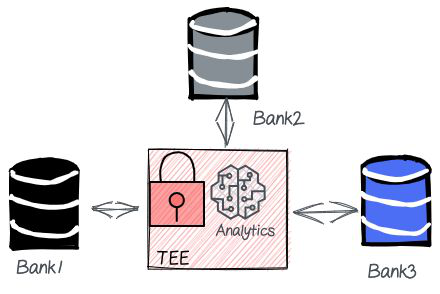
4. Secure Multi-Party Analytics
Problem:
Multiple data owners want to collaborate on shared analytics (e.g., fraud detection across banks) without any owner seeing the others’ raw data.
Relevant patterns:
Fraud detection across financial institutions
Healthcare research across hospital networks
Data clean rooms
5. Secure CI/CD Pipelines
Problem:
Your CI/CD pipeline runs on shared infrastructure (GitHub Actions, GitLab CI, etc.). You want to protect your secrets (API keys, tokens, certificates) from being exposed to the infrastructure provider.
6. Segregating Admin Roles
Problem:
You want to separate infrastructure admins (who manage hosts/hypervisors) from workload admins (who manage specific workloads). With Confidential Computing, infrastructure admins can’t see workload secrets.
This enables a clean separation that was previously impossible:
| Admin Role | Controls | Can See Workload Secrets? |
|---|---|---|
| Infrastructure Admin | Hosts, hypervisors, physical machines, networks | ✗ No |
| Cluster Admin | K8s control plane, nodes, networking, RBAC, namespaces | ✗ No |
| Workload Admin | Specific workloads and their secrets | ✔ Yes |
Use Case Summary
| Use Case | Threat Being Mitigated | Key Benefit |
|---|---|---|
| Secure Inference | Cloud provider steals model | IP protection |
| Secure Chatbot | Provider reads user queries | User privacy |
| Secure Training | Data center steals training data | Data sovereignty |
| Multi-party Analytics | Peers see raw data | Collaboration without exposure |
| CI/CD Protection | Compromised runner steals keys | Supply chain security |
| Admin Role Segregation | Malicious admin reads secrets | Zero-trust operations |